















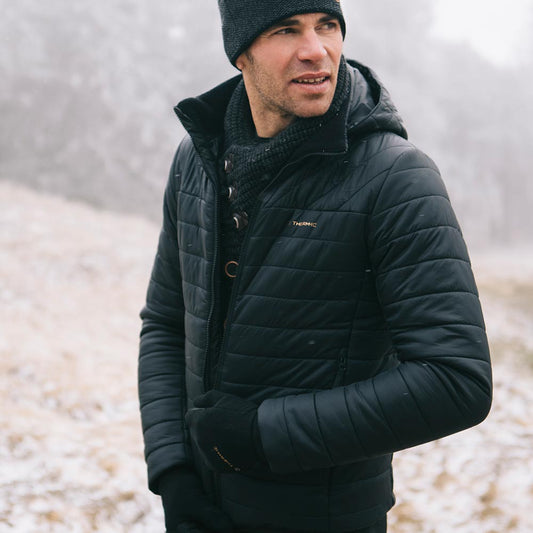


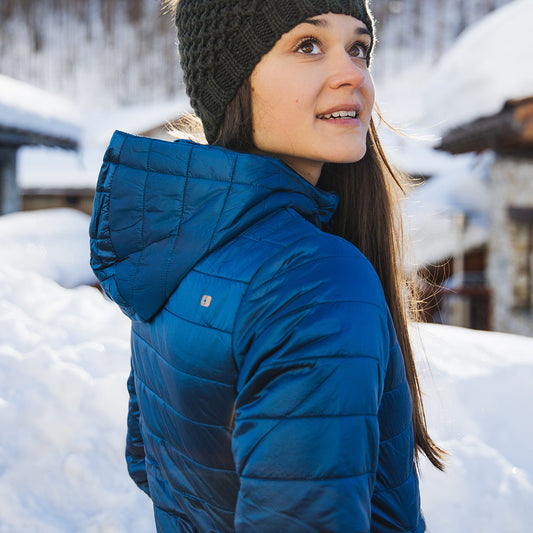

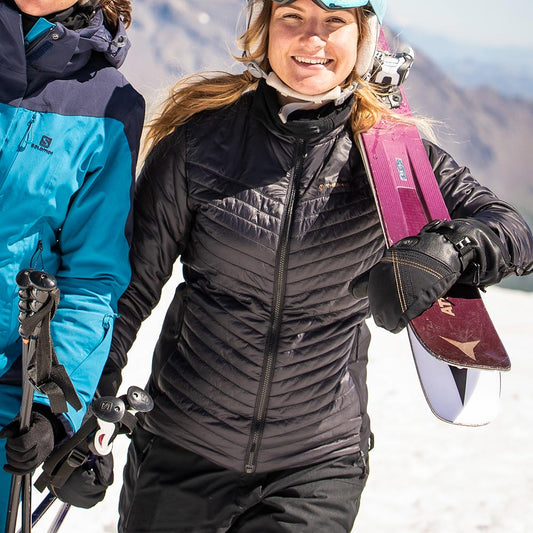
Why a heated jacket/vest changes everything
When you face winter, cold, wind or difficult conditions — skiing, mountains, snow, hiking, winter in the city — a standard coat is sometimes not enough: even if it is well insulated, the cold can still seep in, your body heat may not be enough, or a simple extra layer can become cumbersome. A heated jacket/vest activates heat where you need it — chest, back, kidneys — to maintain an ideal body temperature, regardless of the effort, cold or wind. The result: lasting comfort, protection against hypothermia or numbness, better circulation, and freedom of movement without unnecessary bulk.
What Therm-ic technology actually does
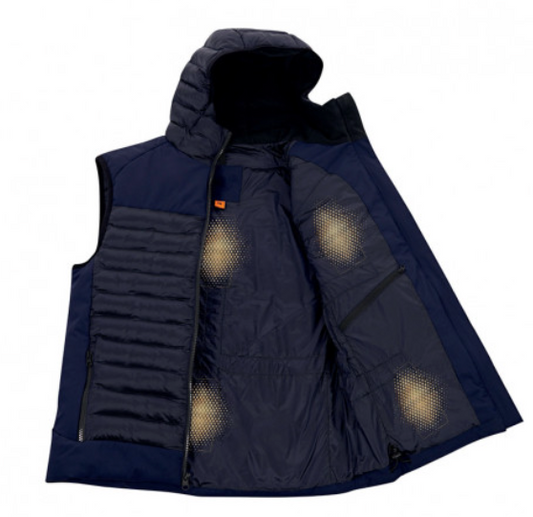
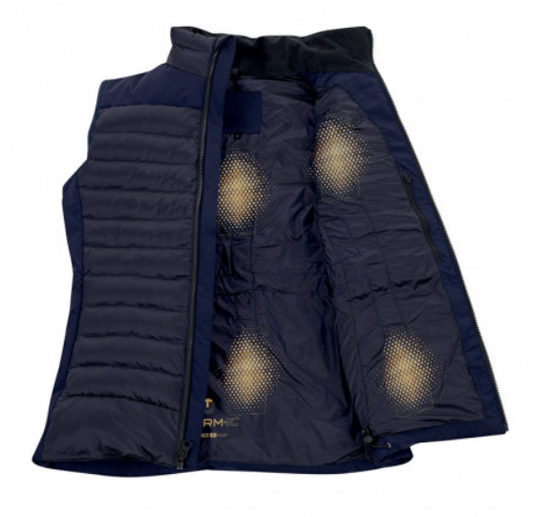
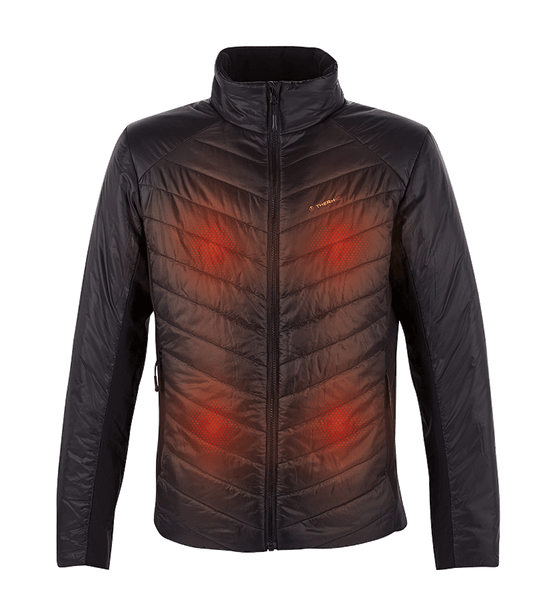
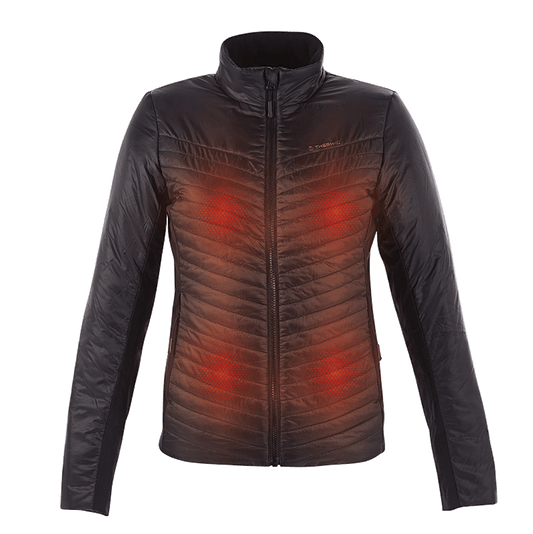
- Active, even heat thanks to integrated heating elements — Therm-ic jackets/vests distribute heat across 5 to 6 strategic heating zones (stomach, back, kidneys, sometimes pockets) for uniform and effective thermal comfort.
- Enhanced insulation + protection against wind/cold— In addition to active heating, the combination of technical materials such as a ‘Windblocker’ membrane and insulating padding (such as ‘Primaloft’) provides a barrier against cold, wind, snow, and moisture.
- Heat adjustment according to needs and context — the user can adapt the intensity according to the weather, the effort or the duration of the activity — optimising comfort, autonomy and thermal safety.
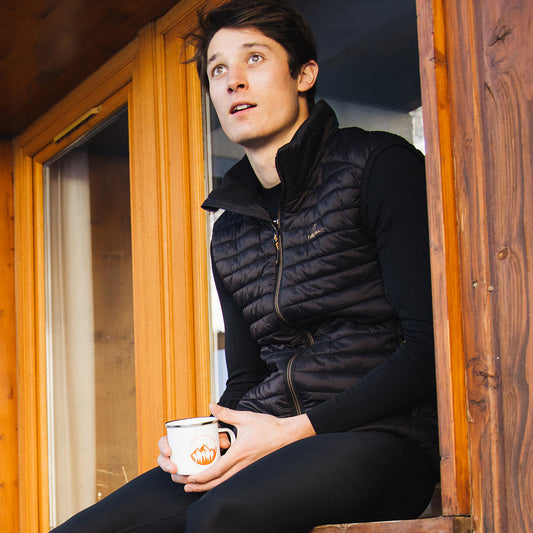
- Lightweight and freedom of movement vs. traditional layers— Unlike a bulky coat or multiple layers, heated jackets/vests are relatively thin and less bulky, making them easier to move in, wear under or over other clothing, and adapt to different uses—skiing, hiking, city life, everyday life.
- Health, comfort and prevention— By maintaining a stable body temperature, you promote good blood circulation, prevent your extremities from getting cold and avoid the risks associated with the cold (discomfort, numbness, muscle stiffness, fatigue)—useful for outdoor sports, long outings, or simply everyday winter life.
Who are these Therm-ic heated jackets/vests for?
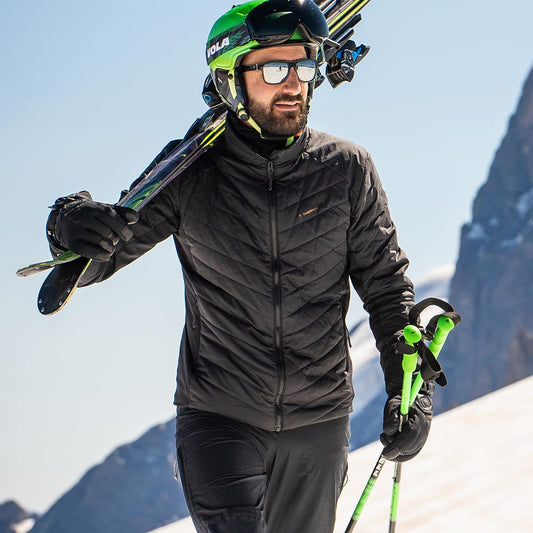
- Winter sports enthusiasts (skiing, snowboarding, ski touring), hikers, trekkers, mountain lovers or those who enjoy the cold — anyone who exposes their body to the cold, snow, wind and altitude for long periods of time.
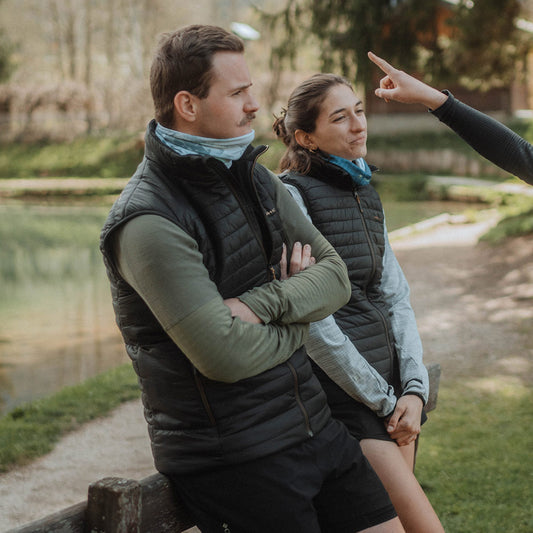
- Urban dwellers who need thermal comfort in winter — for commuting, travelling, winter cold, long stays outdoors — seeking warmth, comfort and practicality without extra bulk.
- People who are sensitive to the cold, have poor circulation, or whose extremities get cold quickly — for whom active warmth is a real comfort or a necessity.
- Those looking for versatility + lightness + performance — a garment that can adapt to the city, the mountains, skiing, hiking or everyday activities, without adding layers.
- For regular outdoor or winter sports enthusiasts — those who go out often and for long periods — because the investment in a heated jacket/vest quickly pays for itself in comfort and usefulness.
Expert advice & best practices
- Combine the heated jacket/vest with suitable clothing—thermal base layer, suitable trousers, accessories (gloves, hat): the heated jacket complements the overall insulation but does not necessarily replace all items depending on use.
- Adjust the heat according to the activity and weather — adapt the intensity: moderate heat for physical activity, higher heat when waiting or resting to maintain comfort and battery life.
- Think about the battery and battery life — check that the external battery (power bank) is charged before you go out, and consider taking a spare battery for long days.
- Maintain the jacket/vest properly — wash correctly (often delicate: low temperature, gentle cycles, battery removed), dry flat, avoid tumble drying or storing folded if this may damage the heating elements.
- Choose the right fit and size — for the heating elements to be effective, the garment must fit well: if it is too loose, the heat will be dispersed; if it is too tight, it may be uncomfortable.
FAQ (frequently asked questions)
Can a heated jacket replace a thick winter coat?
In many cases, yes — especially if it combines insulation + active heating + a good windproof membrane. It may be sufficient on its own for many winter activities (skiing, city wear, hiking). For extreme conditions or freezing cold, it can be used as a mid-layer under a shell.
Does the heating restrict freedom of movement or get in the way?
No — Therm-ic heated jackets/vests are relatively light and thin, not bulky, so they are comparable to a standard jacket that is moderately thick but well insulated. The advantage: active heating without extra bulk.
Does the heating consume a lot of energy? Is the battery life sufficient?
With a suitable battery (power bank), the battery life is generally several hours — enough for a day of skiing or a winter outing.
Are these jackets/vests only useful for skiing or also for city/everyday use?
They are versatile — effective for skiing, mountaineering and hiking, as well as for everyday urban use in winter: commuting, outings, cold winter weather.


