




















Why heated ski socks are a real bonus
When you ski — especially in cold weather, at high altitudes, or during long days — your feet are subjected to severe stress: cold, slowed circulation, cold toes, discomfort, numbness, loss of sensitivity, fatigue. Even traditional ski socks can struggle to maintain a comfortable temperature throughout the day. Heated socks overcome this limitation: they provide constant heat, targeted specifically at vulnerable areas (toes, arch of the foot), improving comfort, circulation, sensitivity and the duration of your skiing sessions — a real comfort differentiator for demanding skiers who are sensitive to the cold or very active.
What Therm-ic technology offers
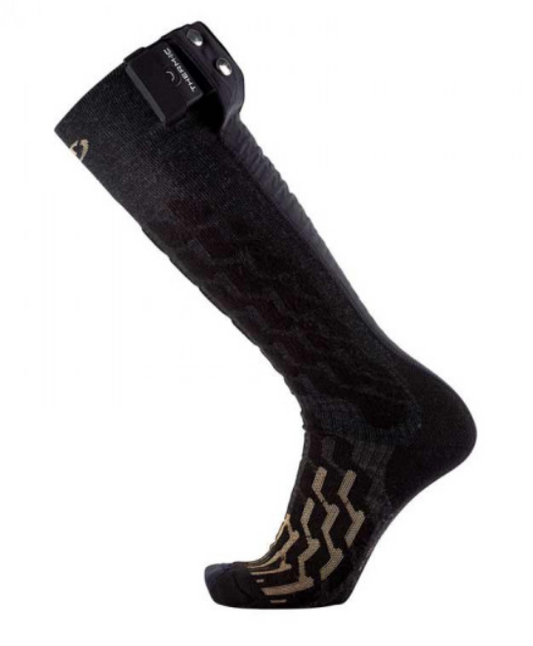
- 360° even heat & targeted diffusion — Thanks to patented Heat Fusion technology, the socks distribute heat all around the foot — not just on the top or in the centre, but also under the foot and at the toes, which are often the most sensitive to the cold.
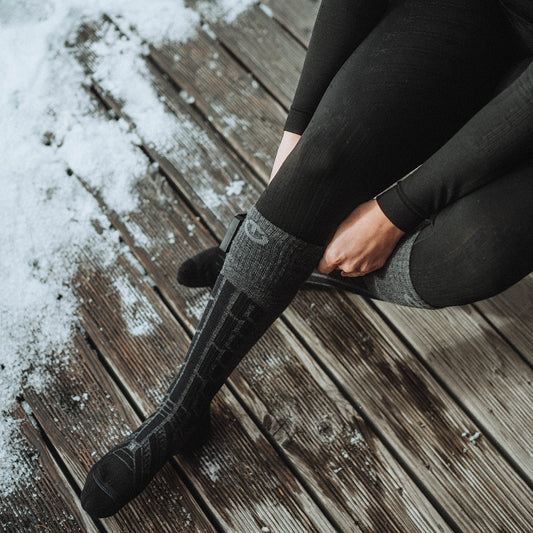
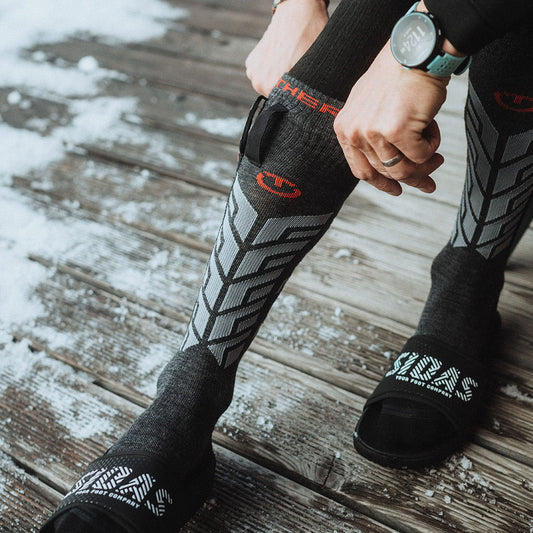
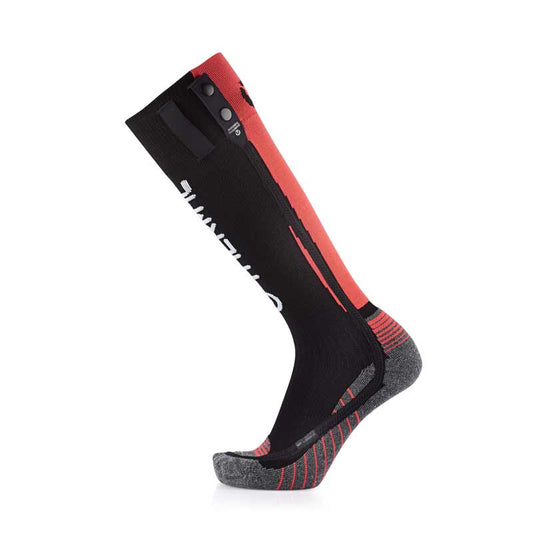
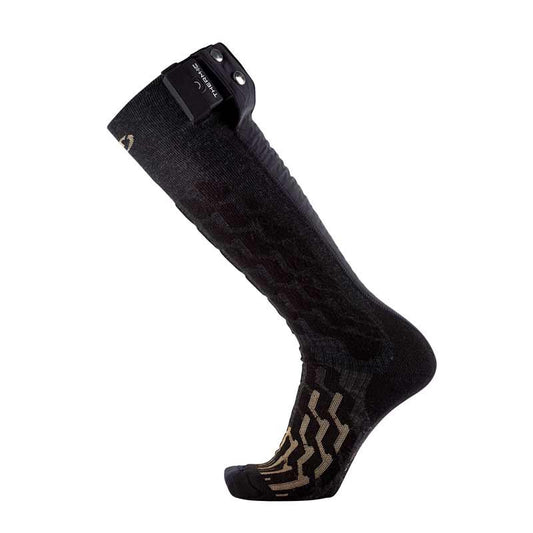
- Comfort, fit and fine finish — Models such as Ultra Warm Performance S.E.T® or Ultra Warm Comfort S.E.T® are designed to fit perfectly into ski boots without altering the fit, thanks to their fine, elastic and ergonomic construction.
- Thermal insulation + moisture management — Merino wool blend + technical fibres, strategically knitted areas and ventilation — combining warmth, temperature regulation and breathability. Your feet stay warm, but without excessive perspiration.
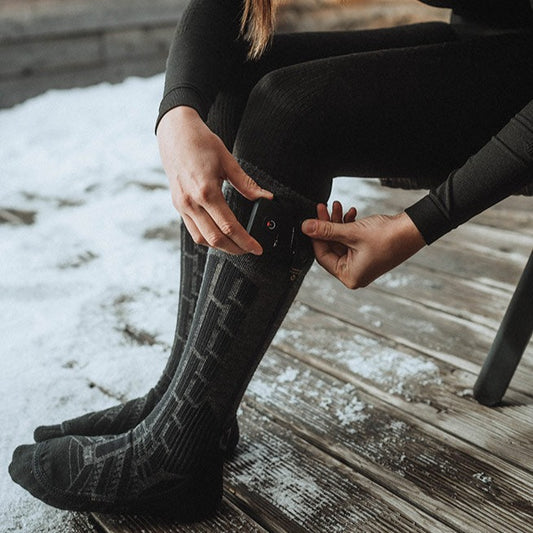
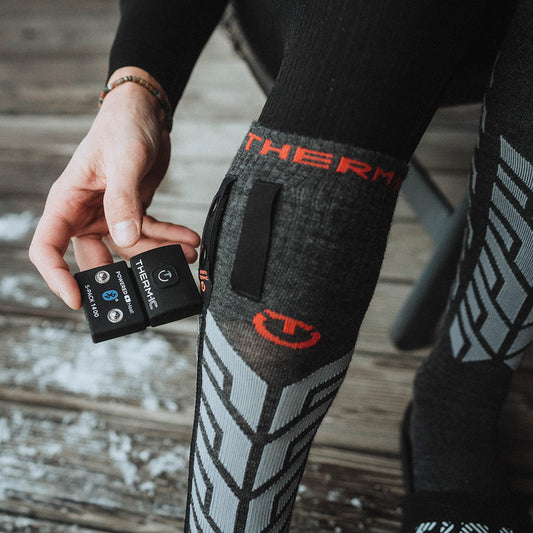
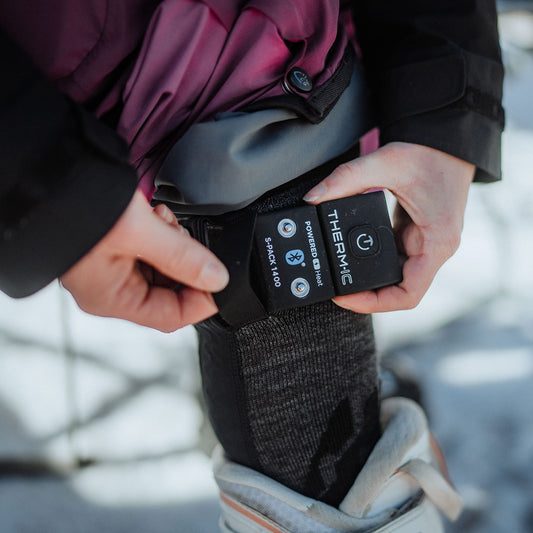
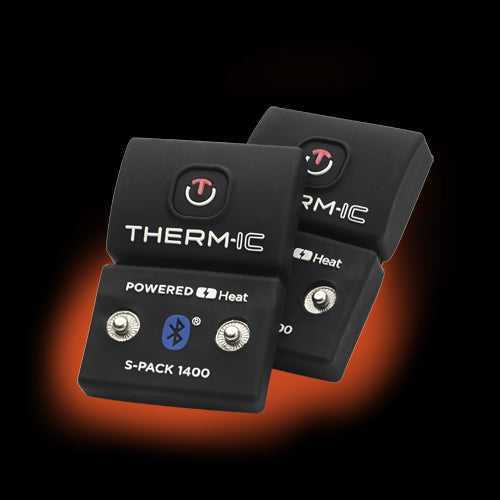
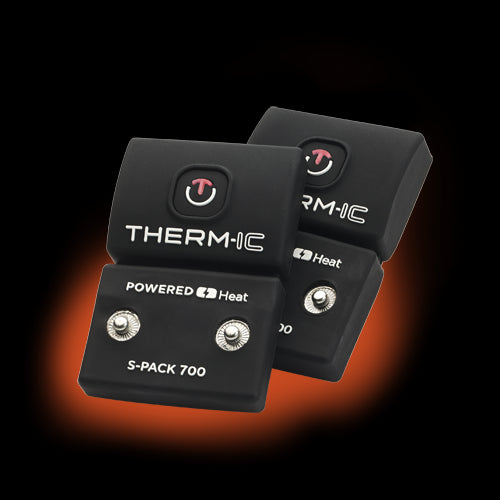
- Battery life suitable for a day of skiing— With a compatible battery (sold separately), the socks can provide several hours of warmth—enough to cover a full day of skiing, including lifts, breaks and descents.
- Continuous comfort — even in extreme conditions — Whether for recreational skiing, freeriding, downhill skiing in the cold, or cross-country skiing, these socks offer thermal protection + comfort + support that enhance the overall experience.
Who are these heated socks for?
- Skiers who are sensitive to the cold, have cold toes, or have circulation problems — particularly useful in very low temperatures or on long days on the slopes.
- Regular or intensive skiers (downhill, freeride, Nordic, etc.) who spend a lot of time in boots and want to maximise comfort and thermal comfort.
- For those who love comfort and performance — those who want to combine sensitivity, precision, comfort and warmth without compromising on fit.
- For those who choose ‘complete’ footwear + boot + insole + sock equipment to optimise comfort, performance and support on their ski trips.
- For demanding skiers looking for versatility — warmth, temperature control, support and comfort, whatever the type of skiing or conditions.
Expert advice & best practices
- Combine suitable footwear with heated socks and insoles if necessary — to maximise warmth, comfort, support and fit.
- Use the right battery for the duration and intensity — for long days or cold outings, choose a battery with sufficient battery life and control the temperature according to the conditions.
- Ensure a good fit in the boot — Therm-ic's slim design allows for a good fit, but check that there are no creases or pressure points, as these can cause discomfort.
-
Careful maintenance — remove the batteries before washing, wash at a maximum of 30°C, dry flat, avoid tumble drying or direct heat to preserve the heating element and technical fibres.
- Plan to recharge the batteries before each outing to ensure their performance, and store the socks correctly (flat, away from moisture and heat).
FAQ / Frequently asked questions
What is the difference between classic ski socks and heated socks?
Heated socks add an active heating system: even in very cold weather, they maintain a constant temperature, unlike classic socks (even technical ones) which eventually let the heat escape after a few hours.
Does the heating element affect comfort or fit?
With thin, technical models such as Ultra Warm Performance S.E.T®, no — the heating line is ultra-thin (≈2 mm) and integrated into the knit, which preserves the fit and comfort.
How long does the battery last for a full day of skiing?
Depending on the S-Pack battery chosen, it is possible to obtain more or less hours of heating — generally sufficient for a typical day of skiing.
Are these socks suitable for all ski boots?
Yes, provided that the boots are well-fitted: their thin construction and anatomical fit allow them to be used even in rigid or close-fitting ski boots without compromising the fit.
Should they be worn with insoles, extra socks or other equipment?
It is best to optimise the whole ensemble: boot + insole + (heated) sock + possibly a thin inner sock if necessary — to maximise comfort, support, warmth and performance.


